Namchow Group is committed to promoting energy conservation and emission reduction, continues to
evaluate and introduces international management standards to improve energy management efficiency and
climate resilience. In the Mainland China and Thailand regions, our factories have established environmental
management systems through ISO 14001 certification and third-party verification to comply with applicable
laws, regulations, and other environmental requirements. We also adhere to the principles of ISO 14064-1
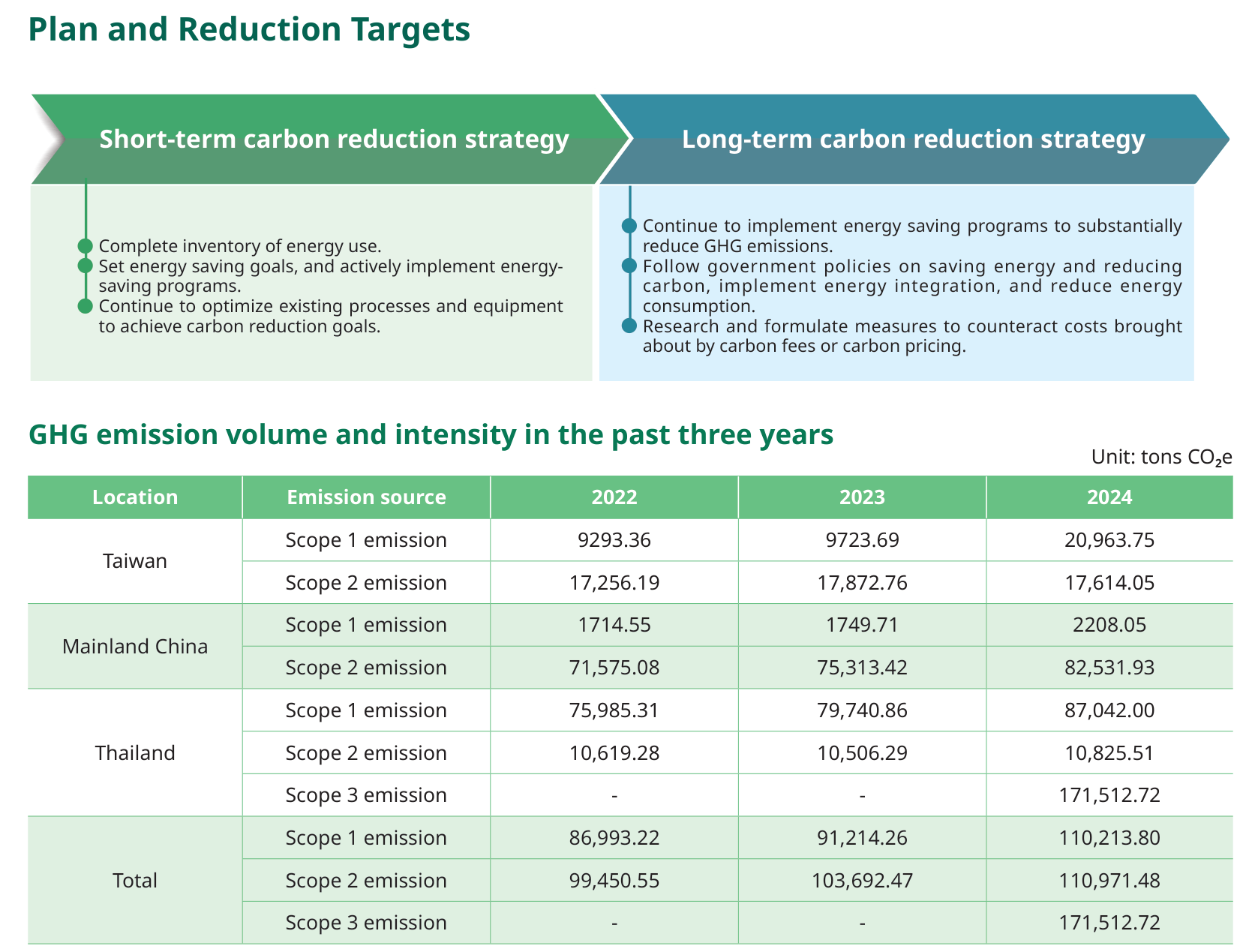
for greenhouse gas inventories, gradually conducting GHG emissions inventories and verifications in various
regions. Carbon reduction targets will be set based on the inventory results. Starting from an inventory of energy
consumption, we will plan a reduction plan, and evaluate and develop actions in multiple aspects to respond to
climate change.
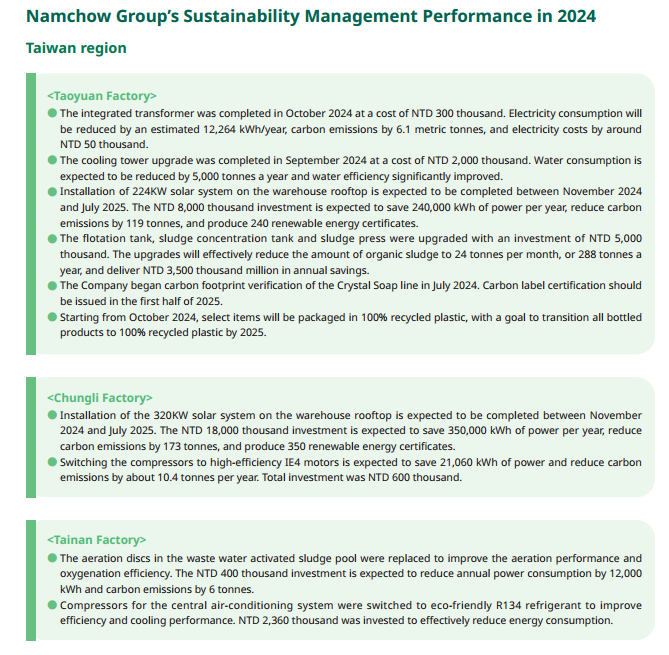
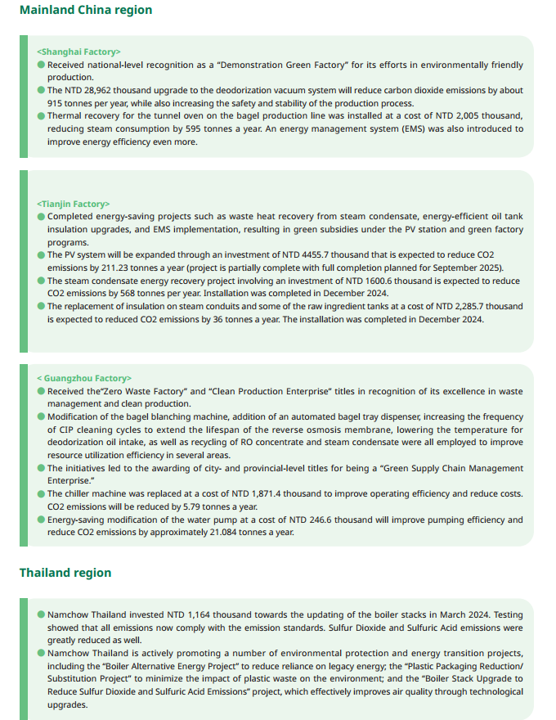
In 2024, Namchow took action to strengthen its commitment to environmental protection by investing
NTD 79,521 thousand in various environmental projects involving energy efficiency, waste reduction, and
recycling. Through these projects, the Group reduced its carbon emissions by approximately 2,053 tonnes and
was recognized as “Demonstration Green Factory,” “Zero-Waste Factory,” and “Clean Production Enterprise.”
The accolades demonstrated the Group’s outstanding performance and firm commitment to environmental
protection.
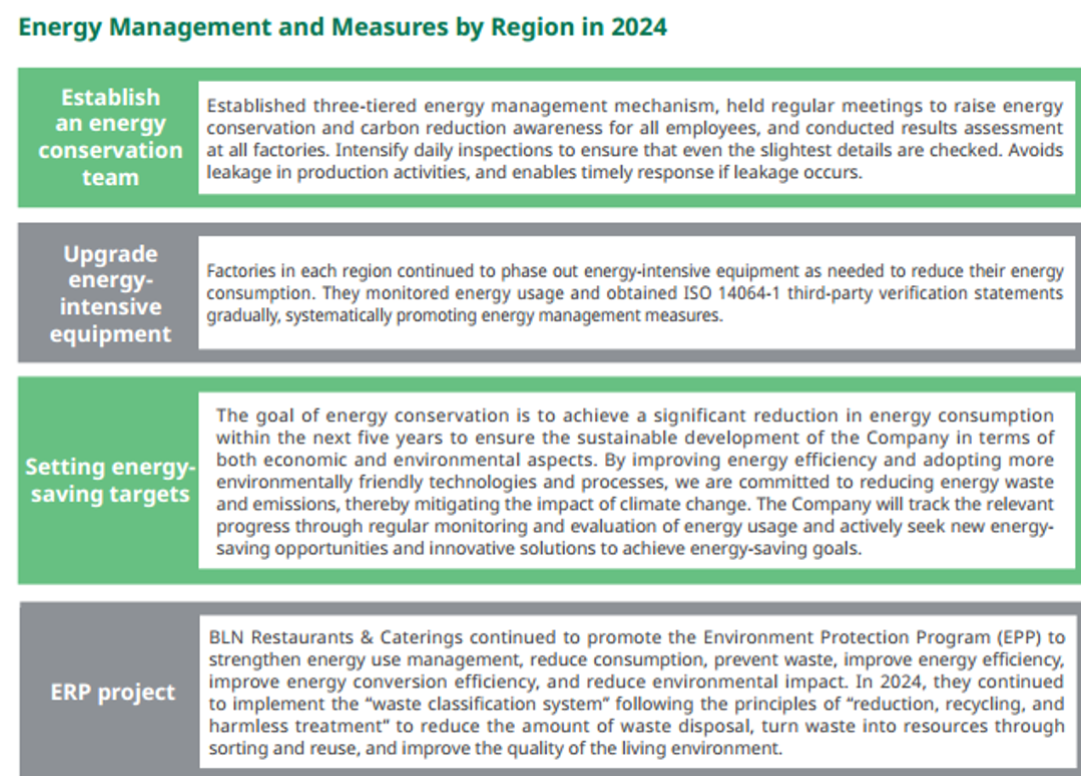
Energy consumption by Namchow Group consists mainly of purchased electricity, natural gas, and coal; to
strengthen our energy management, we have organized an internal energy conservation task force to promote
energy conservation measures that reduce consumption, prevent energy loss, and curb waste. We also developed
energy efficiency indicators and targets in support of regional government energy and environmental policies, or
by signing the "Annual Energy Conservation Target Responsibility Agreement Letter" in order to improve energy
conservation, enhance energy conversion efficiency, and reduce our environmental impact.
Greenhouse Gas Management
Most of the greenhouse gases emitted by Namchow Group are associated with energy consumption. Our
current focus is therefore on the inventory of energy consumption. Each Factory has been authorized to manage
their consumption levels according to local regulations.
Water Resource Management
The changes in the global rainfall pattern, and the increased frequency of heavy rains and prolonged
droughts in recent years have resulted in an unstable water supply, thereby increasing business risks. As food
processing as Namchow Group’s main production model, clean and sanitary water resources and stable water
supply are of significant importance to the Group. Therefore, water resources management plays a critical role in
the Group’s sustainable development.
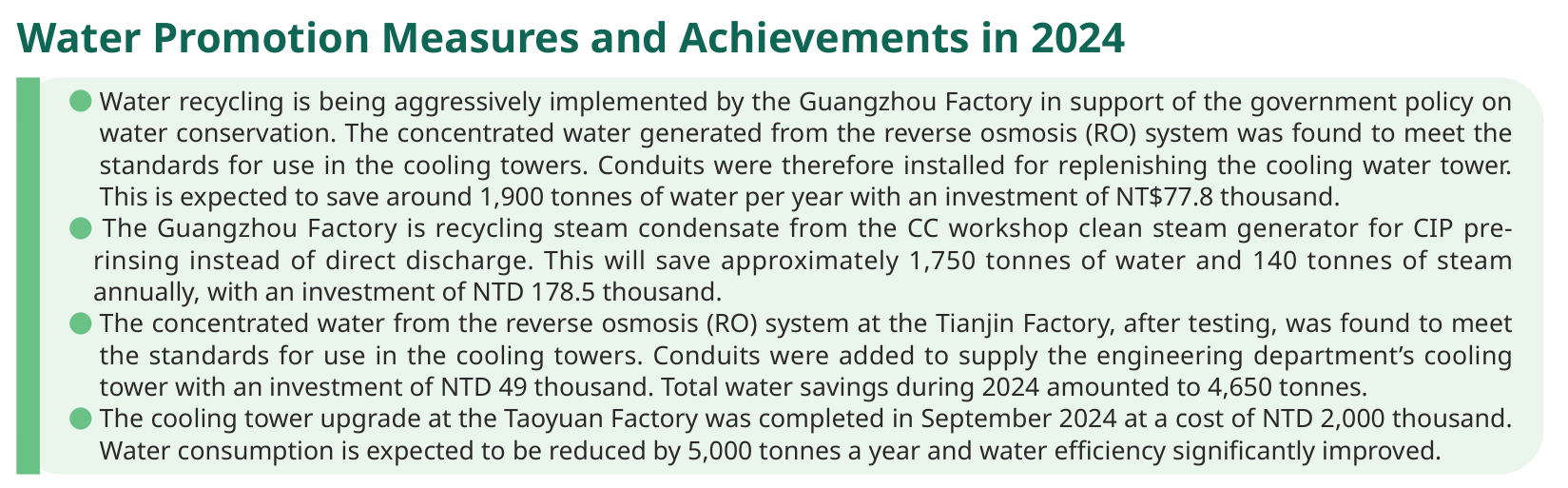
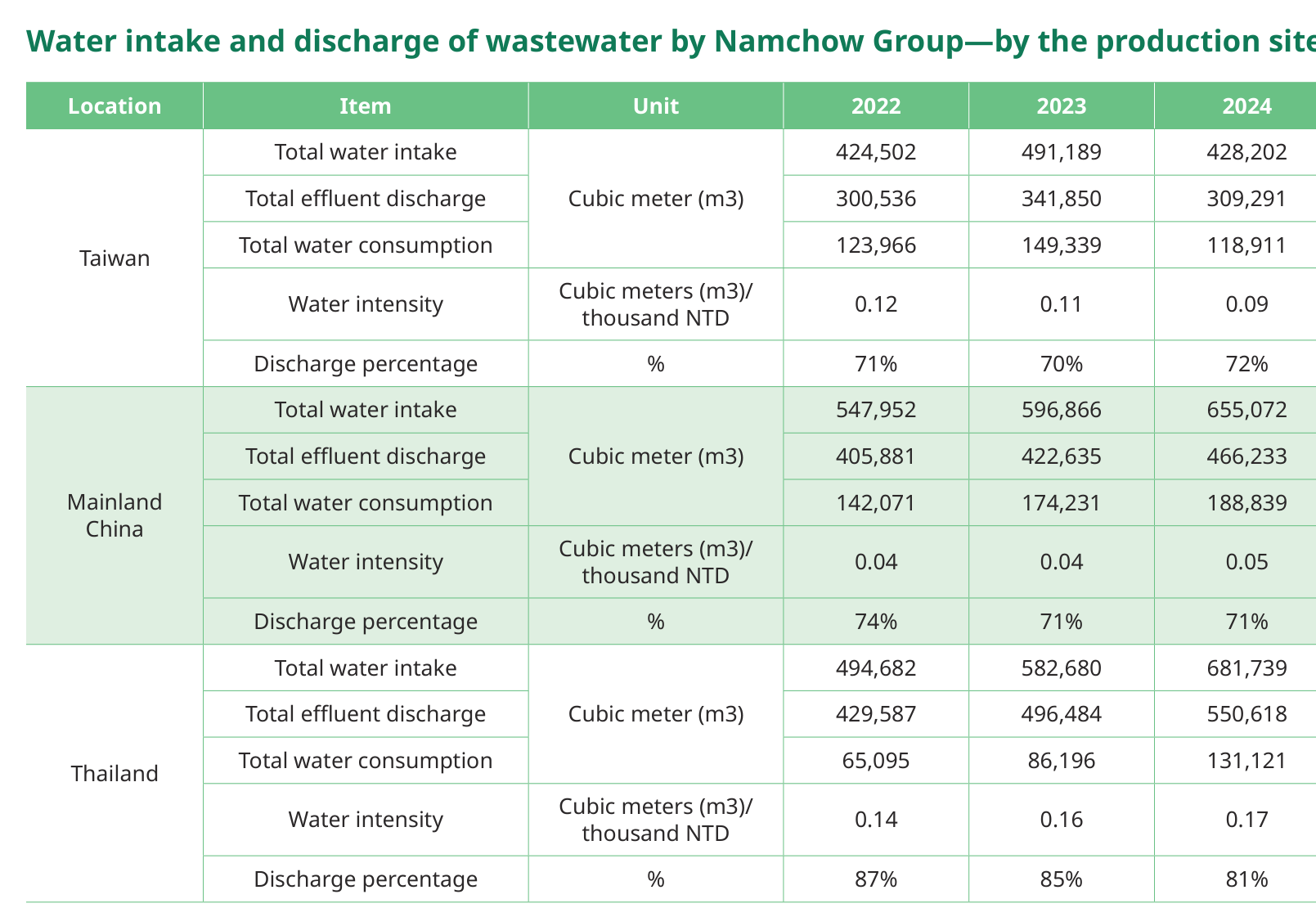
The water used in restaurants and food processing facilities in various regions, including Taiwan and
mainland China, is sourced from disposable tap water provided by local governments or relevant authorities.
The operational risk associated with water resources is relatively low. However, as part of corporate social
responsibility, multiple water conservation measures are implemented to effectively manage water resources.
In Thailand, treated water from deep bores is used. The use of groundwater may lead to ground subsidence and
deplete underground aquifers, so water conservation and exploration of new sources of water supply are issues
our business in Thailand will continue to face in the future.
In recent years, changes in rainfall patterns have occasionally led to water interruptions or restrictions,
with an average duration of less than 24 hours. To address such situations, the Chungli Factory in the Taiwan
region has storage tanks and water towers with a capacity to supply the factory for three days or more, ensuring
uninterrupted operations. Similarly, the Shanghai Qiaohao Factory in mainland China has a 650-cubic-meter
emergency water tank in place to prevent accidents and reduce operational losses.
Due to greater differences in seasonal and regional rainfall in various regions, there is a possibility that
drought may lead to water restrictions or reduced water supply. In addition to ongoing water conservation
measures and wastewater treatment, each region conducts water use inventories using the World Resources
Institute’s (WRI) water resource risk map to regularly assess the water risk levels of the areas where each
production site is located and uses the results to develop water use improvement plans and water conservation
plans.
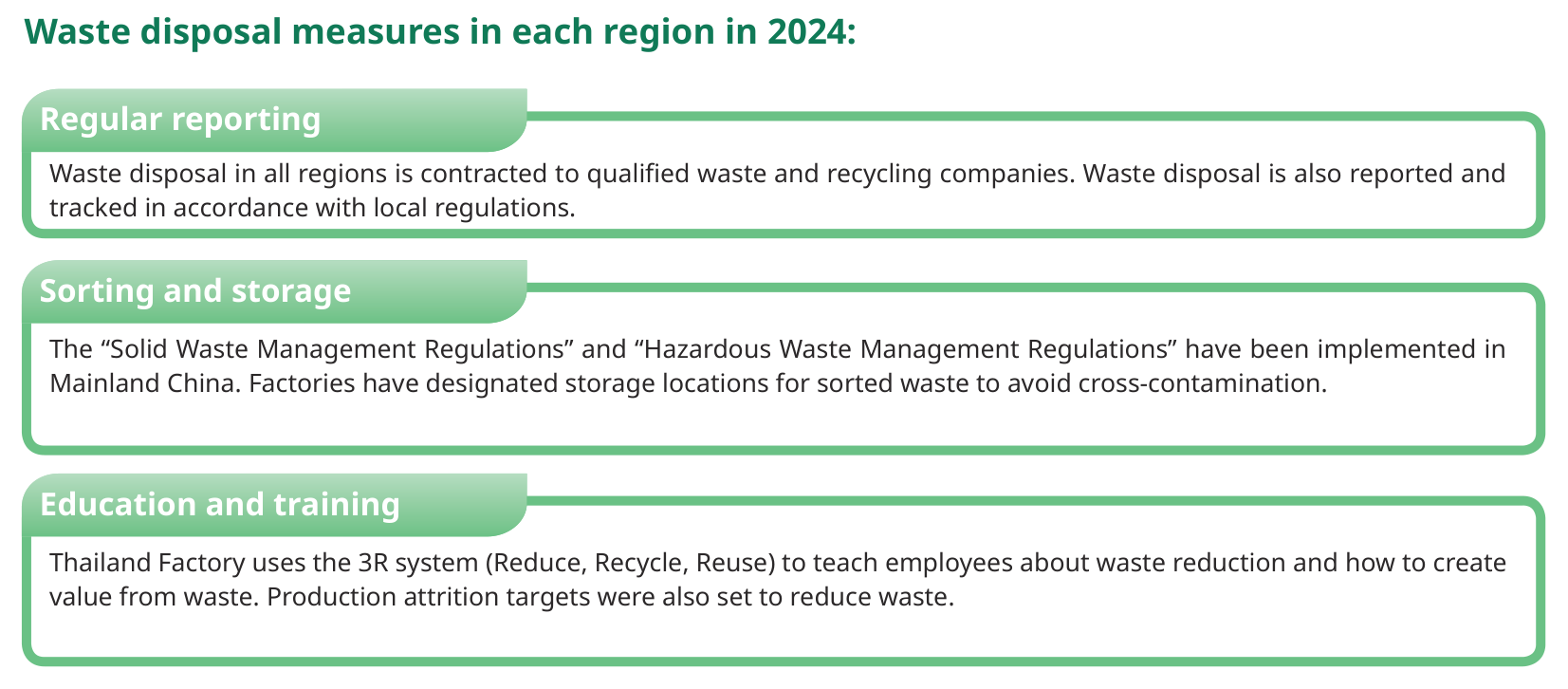
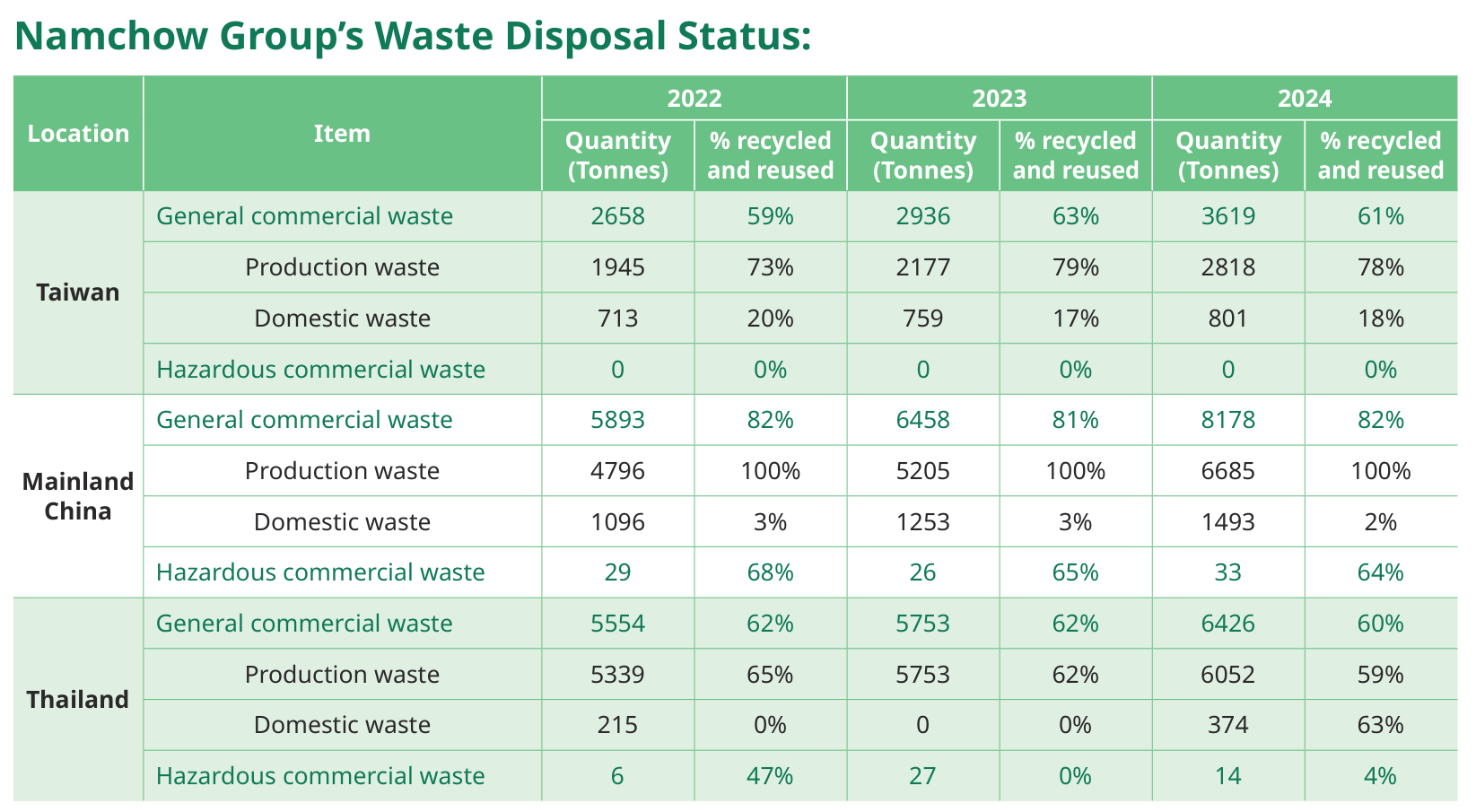
In response to the global trend of green environmental protection, Namchow Group has incorporated the
concept of circular economy into waste management. We modified our processes to reduce waste generated, and
increased the recycling rate from processes to achieve the goal of reducing waste from the source.
Industrial waste generated by Namchow Group’s operating sites in each region is removed, treated, or
recycled in accordance with local government regulations. Related information is also regularly declared through
online reporting. In addition, the removal, disposal, and reuse of industrial waste are double-checked online
within the prescribed deadline. Waste sorting, collection, storage, management, and disposal are enforced for
effective waste control. The waste treatment by the Group’s operating sites in each region in compliance with
the requirements of laws and regulations. They apply for discharge or treatment permits in accordance with the
law and file reports to the competent authorities truthfully. At present, waste is mainly disposed of by external
treatment companies.
Implementation of reduction measures in 2024
The Tainan Factory removed 268.55 tonnes of sludge in 2024, a decrease from the first half of 2023 (273.40
tonnes), indicating that the dewatering and drying equipment is effectively reducing the amount of sludge
requiring removal. The factory is also actively evaluating high-value activation and reuse options for the dried
sludge to further improve resource circulation.
Recycling and reuse is being implemented at the Taoyuan Factory. In 2024, approximately 1,175,460 metric
tonnes of waste was reused and recycled, which was an increase of 643,620 metric tons compared to 2023,
representing a growth rate of 81%. The newly added waste wood (waste pallets) recycling item amounted to
30,290 kilograms. To fully utilize these waste pallets, the Taoyuan Factory contracted a qualified vendor to recycle
and process them into biomass fuel. The move not only extends the lifespan of resources but also reduces the
demand for raw materials, thereby lessening the pressure on natural resources.
To enhance environmental performance, the Taoyuan Factory invested NT$4.83 million in equipment
upgrades in 2024, including the complete replacement of its sludge filter press, dissolved air flotation tank, and
sludge thickener. This upgrade is expected to reduce the water content of sludge from 63% to 25%, effectively
improving processing efficiency and substantially reducing the amount of sludge to be disposed. The amount of
sludge is expected to be reduced by 288 tonnes a year. The initiative not only produces economic benefits but is
also a demonstration of Taoyuan Factory’s commitment to waste reduction.
In keeping with its philosophy of recycling and sustainable use, the Taoyuan Factory generated 610,650 kg of
spent bleaching clay (SBC), of which 551,140 kilograms (90%) were successfully recycled and reused. The recycled
material is used to produce fertilizer for agricultural crops, contributing to both environmental protection and
sustainable development.